From Exhibition to Product: How Museums Turn Collection Stories into Portable Heritage

A museum shop stops being an auxiliary retail unit and starts being what the sector calls the second exhibition hall when its products carry the same standards of provenance and interpretation as the collection itself. Academic work on museum retail argues that shops earn their non-admission revenue by translating curatorial narrative into objects visitors can carry, rather than by moving volume souvenirs[11], and recent scholarship on sustainable museum retail reaches a similar conclusion about ethically sourced artisan lines[12].
So why do some retail ranges read as an extension of the galleries while others sit apart from them? The difference is a repeatable process. This guide sets out a three-step framework, benchmarks each step against institutions currently executing it well, and ends with a procurement checklist you can apply before your next purchase order.
The Three-Step Conversion Framework
Standard retail procurement underperforms in cultural institutions because vendor catalogues optimise for manufacturing volume, while museum audiences are buying provenance. The framework below rebuilds the sourcing sequence around that difference.
An object, a technique, a community history
Step 1 · Origin and community alignment
Makers who hold the originating technique
Step 2 · Archival reinterpretation
Motif worked through a real technique
Step 3 · Multi-year supply structure
A product that continues the exhibition

Quick conversion matrix: catalogue sourcing and portable heritage sourcing
| Dimension | Catalogue sourcing | Portable heritage sourcing |
|---|---|---|
| Origin | Contract manufacturer applying archival images to stock inventory | Direct partnership with craft communities connected to the collection |
| Design method | One-to-one digital transfer onto mugs, totes and stationery | Motif reinterpreted by a skilled maker in an appropriate material |
| Visitor reading | Quick, low-friction purchase; the appeal is the image and the price | A carryable piece of the exhibition; gift and keepsake potential |
| Staff role | Largely transactional; the object is self-explanatory on the shelf | Front-of-house tells the craft story; conversion rises with it |
| Lifecycle | Often seasonal, tied to a show or a moment | Multi-year core line with stable repeat demand |
Step 1 — From Collection to Source Community
Authenticity in heritage retail is decided at the point of manufacture. When an object is made using a technique genuinely connected to the collection's history, the shop becomes a working extension of the display. When it is not, no amount of packaging copy will close the gap.
Benchmark: the Pitt Rivers Museum shop
Oxford's Pitt Rivers Museum was shortlisted for Shop of the Year at the 2026 Museums + Heritage Awards, after what the museum described as its most successful retail year on record in 2025.[1] The award itself went to Chatsworth House's Orangery Shop at the ceremony on 13 May 2026, with Museum of the Home highly commended.[2] Reaching a five-shop national shortlist alongside the National Theatre Bookshop and Derby Museums is, for a university anthropology museum welcoming around half a million visitors a year, a strong validation of a sourcing model that is unusual for the sector.[1]
That model rests on direct partnership with makers from the indigenous and originating communities whose work shaped the collections, so that visitors take home handmade products carrying those communities' own stories.[1] Current examples include:
- Phil Omodamwen — a sixth-generation Benin bronze caster whose work helps keep the lost-wax casting method alive for contemporary audiences.[1]
- The Al Am'ari women's collective, Ramallah — producing hand-embroidered tatreez, for whom the museum partnership represents one of few available income sources.[1]
- Anagama-fired ceramics — pots thrown and fired in the Oxford anagama kilns at Wytham Woods using a traditional Japanese wood-firing method that produces unrepeatable glaze effects.[1]
The commercial argument and the ethical one point the same way here: direct work with makers and collectives means the museum is actively supporting the continuation of traditional industries, and the retail numbers improved while it did so.[1]
The cross-departmental workflow that makes it possible
What distinguishes this from ordinary ethical sourcing is that buying decisions are not made by retail alone. Pitt Rivers credits the achievement to collaborative working between makers, curators, researchers and the museum's visitor experience team.[1] In practice that means four functions holding four different vetoes:
How museums document and assess new objects — the same discipline applied to retail sourcing.
Buyer self-assessment — Step 1
▢ Is the manufacturing technique traceable to the cultural or historical origin of the collection item?
▢ Does the purchase directly support the originating craft community, on terms they agreed to?
▢ Have curatorial or conservation colleagues signed off the narrative before production, not after?
Step 2 — From Story to Commission and Reinterpretation
Direct replication — cast replicas, scanned prints — serves a narrow collector market. Broader conversion comes from reinterpretation, where a contemporary maker translates an archival motif into something with a function in a modern life.
Benchmark: the V&A Shop's sourcing philosophy
The V&A Shop states plainly that it is proud to support independent craftspeople in the UK and overseas, and that its range is drawn from the museum's collections and exhibition programme.[3] Its designer roster is the useful part for buyers: it runs from William Morris through to contemporary names including Freya Pocklington, Adam Bridgland and Solange Azagury-Partridge.[3]
That span is the argument. Reinterpretation is not a recent marketing device layered onto museum retail; it is the same Arts and Crafts logic the V&A has been associated with since Morris's own lifetime, applied continuously. A buyer citing this lineage internally is on far firmer ground than one pitching reinterpretation as an innovation.
William Morris, C.F.A. Voysey
Pattern, technique, provenance
Freya Pocklington, Fern Taylor, James Sims
One continuous lineage, not two separate product strategies.
Sourcing under-the-radar craft talent
Reinterpretation also gives buyers a route to makers who are not yet on any wholesale platform. V&A East's buying is explicitly editorial in this respect, favouring names largely under the radar and positioning the shop as a place to discover new talent.[4] Two makers illustrate the profile:
- Fern Taylor, a Deptford ceramicist who taught herself the Japanese nerikomi marbled-clay technique during lockdown.[4]
- James Sims of Clink Street Ceramics, who extended his Rave Culture Theory project into a series of vessels drawing on the 1980s music scene.[4]
Neither maker could have been found in a catalogue. Both produce something a competitor shop cannot stock — which is the specific commercial contribution commissioning makes to a range.
Buyer self-assessment — Step 2
▢ For this tier of the range, are we applying a surface pattern to a stock item, or commissioning a craft reinterpretation?
▢ Can the maker explain, in their own words, how their technique relates to the archival source?
▢ Does the packaging or swing tag let front-of-house staff tell that story in under thirty seconds?
Step 3 — From Product to Long-Term Supply
The real test of a heritage line is whether it survives past its launch season. One-off promotional items generate administrative overhead and inventory volatility; recurring core lines generate compounding returns. The question for a buyer is therefore not only whether a supplier can make the thing, but whether they can still make it in three years.
Category validation: hand embroidery has already been proven
Textiles are often passed over in heritage retail on the assumption that handwork cannot scale. The V&A's partnership with fair-trade brand People Tree is the counter-evidence. The first collection launched in July 2017, drawing on the depth of pattern in the museum's archives[5], and the collaboration has run season after season since, described by People Tree as its best-selling collaboration.[6]
Three details matter for a buyer weighing a handcraft category:
- The technique is the product, not a finish. The range is built on traditional skills — hand weaving, hand knitting and hand embroidery — which also create employment in rural areas.[7] Production sits with Indian producer organisations including Creative Handicrafts and Rajlakshmi.[5]
- The archive genuinely drives design. The Spring/Summer 2018 range reworked designs by William Morris and C.F.A. Voysey held in the V&A archives, including a print drawn from an 1883 Morris wallpaper pattern.[5] Later seasons drew on the museum's South Asian textiles collection.[8]
- Ranges can be timed to the exhibition calendar. The sixth collection, a nine-piece range, was released to coincide with the Kimono: Kyoto to Catwalk exhibition.[9] This is the clearest existing proof that a handcraft supply line can be synchronised with curatorial programming rather than running parallel to it.
Mechanism design for multi-decade partnerships
Long partnerships do not survive on goodwill; they survive on a repeatable routine. In the V&A's twenty-year jewellery collaboration with Chow Sang Sang, that routine is an annual archive visit: the brand's design team travels to the museum each year to study historical metalwork and ornament directly before developing the season's collection.[10]
Written into a supply agreement, a scheduled archive research session does two things at once. It keeps the product pipeline fresh without renegotiating the relationship each season, and it keeps curatorial accuracy inside the process rather than bolted on at sign-off.
Buyer self-assessment — Step 3
▢ Can the supplier hold lead times and quality across a multi-year horizon, not just a launch run?
▢ Can they refresh a range against next year's exhibition programme?
▢ Do they hold a legal entity and compliant invoicing in our operating country?
What the Sector Actually Measures
Before committing to any sourcing model, it is worth knowing which numbers the sector uses to judge a museum shop. The Museums + Heritage Shop of the Year entry criteria are unusually explicit, and they double as a serviceable KPI set for any retail operation.[13]
| Metric | Why a heritage craft range moves it |
|---|---|
| Average transaction value | A mid-tier craft item raises basket value in a way that additional sub-£10 lines cannot |
| Spend per head | The metric Pitt Rivers reports improving alongside its maker-partnership shift |
| Conversion rate | Share of visitors who buy; responds strongly to staff who can tell a product's story |
| Gross and net margin | Exclusive commissioned lines are not directly price-comparable elsewhere, which protects margin |
| Year-on-year change | Recurring core lines produce comparable year-on-year data; one-off ranges do not |
One further point from the entry criteria deserves attention from smaller institutions: judging explicitly takes the relative size of the organisation into account.[13] Scale is not the barrier it is assumed to be.
Reach and Depth: Balancing Two Retail Models
Licensing at scale and small-batch craft commissioning answer different questions, and a well-run shop uses both. The British Museum's licensing operation in China works with over a thousand brand partners and reaches an audience in the tens of millions across social and e-commerce platforms — a scale of cultural reach that no hand-made range could achieve on its own.[14] What changes with scale is structural rather than moral: the further a programme runs through third-party manufacturing, the more deliberately craft depth and origin storytelling have to be designed back in. Reach and depth are managed as a balance, not assumed to arrive together.

Two roles on the same shelf — the question is the ratio between them, not which one is right.
A printed archival image on a ceramic mug does exactly what it is designed to do: it puts the collection into a great many hands at an accessible price, and it carries the footfall conversion a shop needs. What it does not do is hold the visitor's attention on the making. A range weighted entirely to one column will either reach widely without depth, or carry depth without reaching far — which is why the ratio, rather than the choice, is the buying decision worth spending time on.
Making It Work at Any Scale
The price ladder
A shop needs entry-level volume to convert footfall and higher tiers to carry margin. V&A East offers a useful published reference point: over two-thirds of its stock is priced below £30, aimed at a younger and less touristy audience, with the range topping out around £175 for art ceramics.[4]
£150–£1,000+ · master bronzes, fine art embroidery
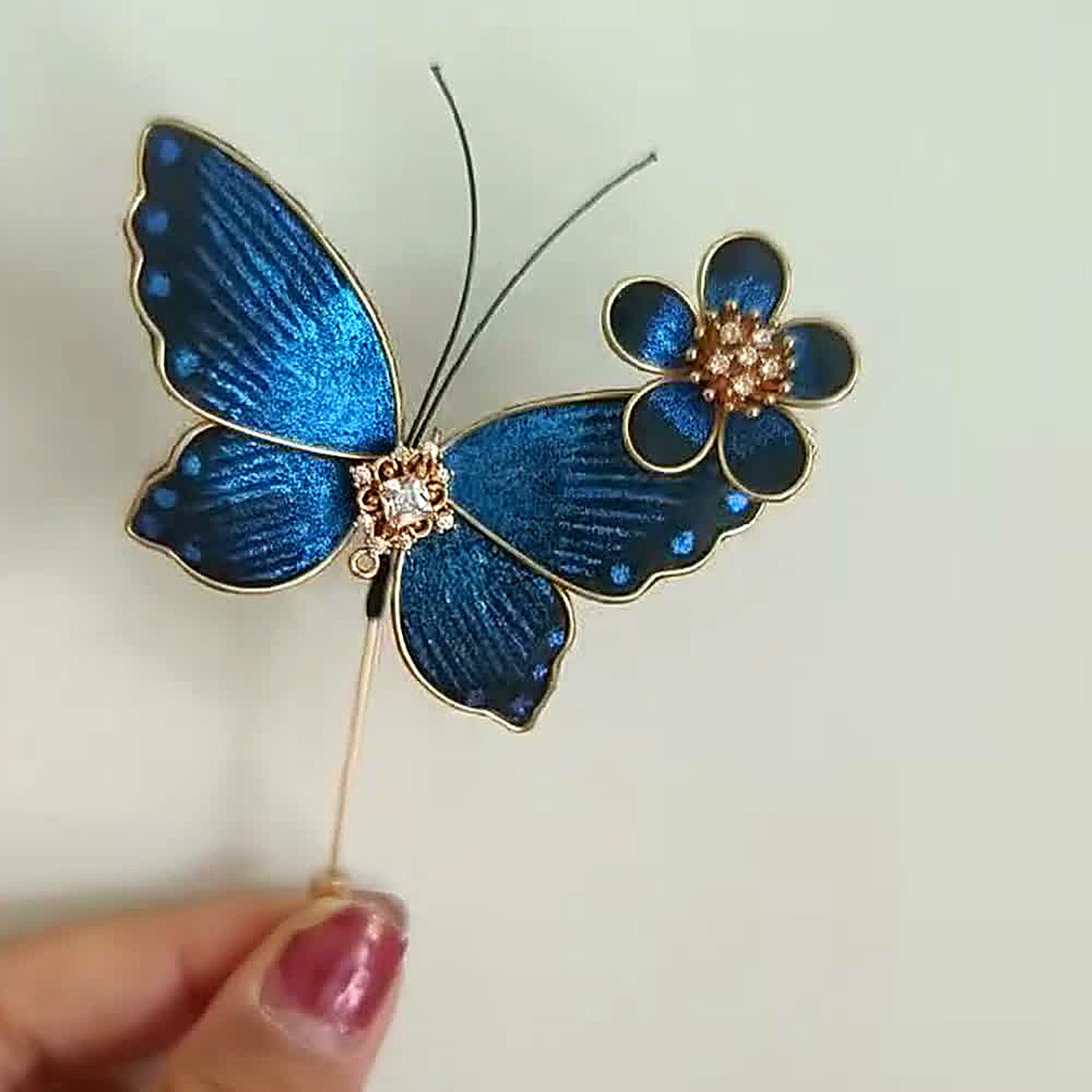
£35–£120 · embroidered brooches, studio ceramics
Sub-£30 · printed totes, small craft kits, stationery
The middle tier is where most shops have a gap — and where craft suppliers fit.
| Tier | Price band | Example categories | What the visitor is buying |
|---|---|---|---|
| Impulse / entry | Sub-£30 | Printed totes, stationery, small craft kits | A memory token; low decision friction |
| Mid-tier narrative | £35–£120 | Hand-embroidered accessories, studio ceramics, silk pieces | A considered gift; material and story matter |
| Hero / collectible | £150–£1,000+ | Master-crafted pieces, commissioned archive works | Collector interest, donor and institutional gifting |

Small budgets, local maker networks
The framework scales down cleanly, because the variable is the maker network rather than the budget. Regional institutions substitute local independent makers for international origin communities — the Museum of Cambridge, Weald & Downland Living Museum and Birmingham Museums all build ranges around local producers and craftspeople, from handmade jewellery and small gifts to textiles and homeware.[15]
The strongest recent proof is the D-Day Story in Portsmouth, which won Shop of the Year at the 2025 awards against national institutions on a comparatively modest budget.[16] Sourcing from local ceramicists, woodturners and textile artists whose work reflects regional heritage produces exactly what a large institution cannot easily replicate: an exclusive, low-mileage range that reinforces the museum's own community mission.
The Framework Applied: A Worked Example
To see how the three steps read from a supplier's side, here is the same framework applied to Royal Chou, a UK-registered heritage craft supplier (Borderless Atelier Ltd) working in Su silk embroidery. The point is not the company; it is what a buyer should be able to establish about any supplier at each step.

STEP 1 · Origin and lineage
Su silk embroidery is a documented regional tradition with a continuous transmission line. Work by master embroiderer Zhou Xueqing is held in the permanent collection of the Royal School of Needlework, founded in 1872 and based at Hampton Court Palace.[17] The buyer's test here is whether provenance can be verified externally rather than asserted in a lookbook.
STEP 2 · Reinterpretation and craft education
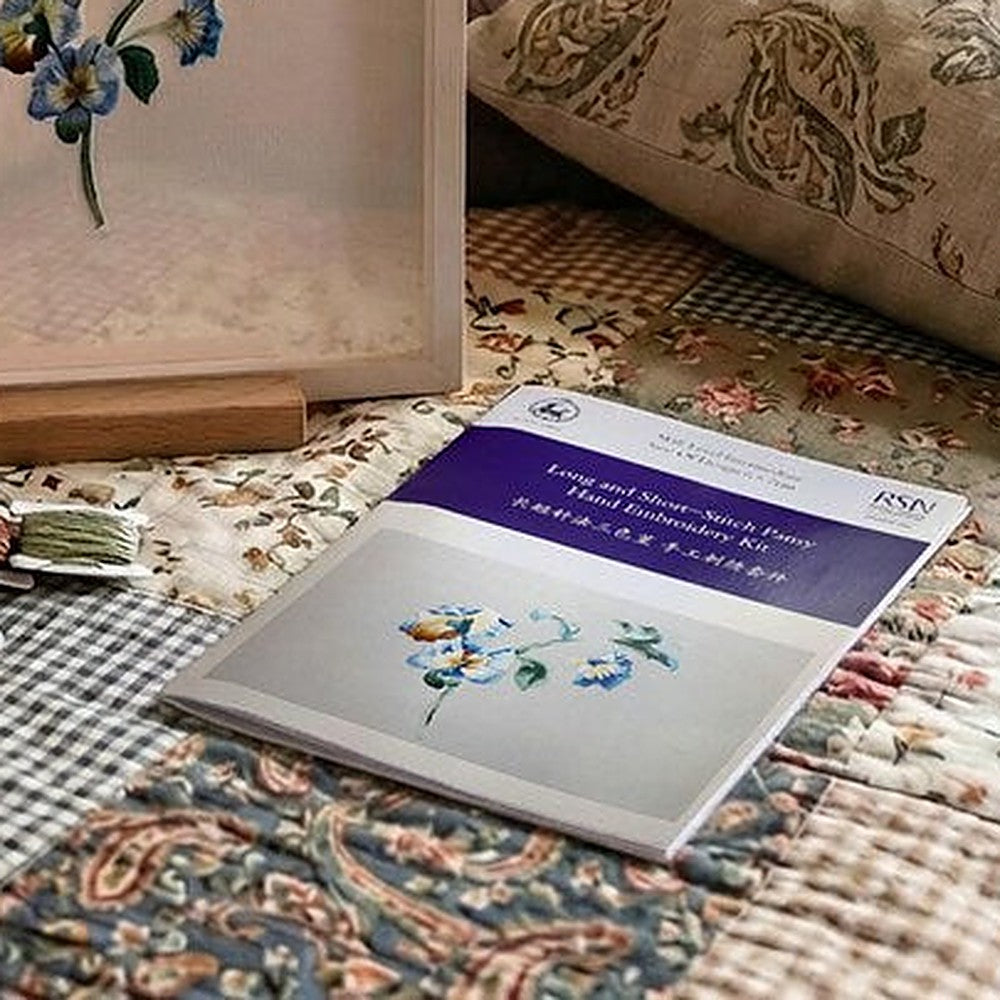
Three generations of artisan practice, with long-and-short stitch technique documented well enough to be taught. That makes an interactive format possible: the Pansy embroidery kit supplies twenty-one mulberry silk thread shades, silk organza and a display frame, so a visitor can work the technique they have just seen in a case. Craft kits also sit naturally in the sub-£30 to mid-tier bands.
STEP 3 · Supply structure
A tiered range from £75 ready-to-ship brooches through £350 commissions to collectible pieces at £1,190, covering the mid and hero tiers of the ladder above. Trading through a UK-registered entity means standard purchase orders, domestic invoicing and small-batch reordering without import handling — the practical difference between a supplier a buyer can use and one they admire from a distance.
Further reading on the technique and its retail application: why handmade craft still matters, the timeless beauty of silk embroidery, and the complete guide to Royal Chou's heritage craftsmanship.
The Museum Buyer's Sourcing Checklist
A ten-point audit to run before issuing a purchase order on any collection-inspired range.
| Step | Audit question | Pass criteria | Procurement action |
|---|---|---|---|
| 1 | Is the material or technique linked to the collection's origin? | Technique matches the collection's cultural or historical context | Verify artisan lineage and raw material origin |
| 1 | Does the purchase benefit the originating community or a local maker? | Direct partnership or fair trade certification in place | Request community impact or fair-wage documentation |
| 1 | Has curatorial or conservation staff reviewed the narrative? | No historical inaccuracies in packaging or label copy | Submit copy for curatorial sign-off before production |
| 2 | For the craft tier, is this reinterpretation or image transfer? | Motif reworked by a named maker in an appropriate medium | Route printed catalogue items to the entry tier instead |
| 2 | Does the packaging document the process and the maker? | Swing tag or insert carries maker story and technique notes | Require story assets as part of the supply agreement |
| 2 | Can front-of-house explain the object in thirty seconds? | One-page staff brief exists per product line | Build the brief into range launch training |
| 3 | Can the vendor sustain multi-year supply for a core line? | Demonstrable production stability over two or more years | Move to a framework purchase agreement |
| 3 | Is the supplier structured for straightforward domestic procurement? | Local legal entity, compliant invoicing and fulfilment | Obtain registration details and agree B2B trading terms |
| 3 | Can they support exhibition-themed adaptation? | Custom colourways or motif adaptation offered | Schedule an annual archive review session |
| 3 | Will the range generate comparable year-on-year data? | Core line intended to repeat, not a one-season drop | Set ATV and conversion baselines at launch |
Frequently Asked Questions
What does the "second exhibition hall" mean in museum retail?
It treats the shop as a continuation of the galleries rather than a separate retail unit. Products carry the same provenance, technique and narrative standards applied to the collection, so a visitor leaves with an object that extends the exhibition.
How do museums source ethically from origin craft communities?
Through direct partnership with makers and collectives from the communities represented in the collection, rather than through wholesale catalogues. At Pitt Rivers this runs as a cross-departmental process involving retail, curatorial, research and visitor experience teams, so commercial, cultural and conservation judgements are made together.[1]
How do licensed merchandise and commissioned craft differ in a retail range?
Licensing applies an archival image to an existing product form, which scales quickly and reaches a broad audience at accessible price points. Commissioning asks a maker to rework an archival motif through a real technique in a real material, which supports a higher price ceiling, a longer shelf life and a story front-of-house staff can tell. Most successful ranges carry both, weighted to the shop's footfall, floor space and audience.
Can a small museum apply this framework on a limited budget?
Yes — the variable is the maker network, not the budget. Regional museums substitute local independent makers for international origin communities. The D-Day Story in Portsmouth won Shop of the Year in 2025 against national institutions on a modest budget.[16]
Is hand embroidery commercially viable for museum retail?
Yes. The V&A's collaboration with People Tree launched in July 2017 and has run season after season since, using hand weaving, hand knitting and hand embroidery to reinterpret patterns from the museum's textile archive.[5][7] Its sixth collection was timed to the Kimono: Kyoto to Catwalk exhibition, showing that a handcraft line can be synchronised with curatorial programming.[9]
Which metrics do museum retail awards actually judge?
The Shop of the Year entry requires average transaction value, spend per head, turnover, gross and net profit, year-on-year percentage changes, and conversion rate — the share of visitors who buy. Judging also takes the relative size of the organisation into account.[13]
References
- Pitt Rivers Museum shortlisted for Shop of the Year — University of Oxford Gardens, Libraries & Museums. Maker partnership model, cross-departmental working, Phil Omodamwen, Al Am'ari collective, anagama-fired ceramics, 2025 retail performance, visitor numbers.
- 2026 Winners — Museums + Heritage Awards. Shop of the Year outcome: Chatsworth House Orangery Shop winner, Museum of the Home highly commended, full shortlist.
- About the V&A Shop — Victoria and Albert Museum. Sourcing philosophy, support for independent craftspeople, designer roster, responsible sourcing commitment.
- V&A East Shop: what to buy — Evening Standard. Price structure with over two-thirds of stock under £30, editorial buying approach, Fern Taylor and James Sims.
- People Tree launches new capsule collection with V&A — FashionNetwork UK. July 2017 launch date, organic cotton, Indian producer organisations, SS2018 Morris and Voysey sources, 1883 wallpaper pattern.
- V&A Collaboration — People Tree. Partner's own description of the collaboration's longevity and commercial performance.
- Cover story: the V&A going from strength to strength — Total Brand Licensing. Use of hand weaving, hand knitting and hand embroidery; rural employment; Autumn 2022 archive-derived patterns.
- Moonpig, People Tree among new collaborations for the V&A — Licensing Source. Fourth-year status at SS2021; South Asian textiles collection as a design source.
- V&A teams with People Tree for sixth collection — Licensing Source. Nine-piece range timed to the Kimono: Kyoto to Catwalk exhibition.
- V&A × Chow Sang Sang collaboration materials — brand communications. Twenty-year partnership duration and the annual archive research visit mechanism.
- Understanding the impact and potential of museum stores — Wang, University of Washington, 2022. Theoretical basis for treating retail display as an extension of collection display.
- The role of the museum shop in sustainable futures — Larkin, Museum Management and Curatorship, 2024. Peer-reviewed treatment of the shop's educational role and ethical artisan sourcing.
- 2026 Categories: Shop of the Year entry criteria — Museums + Heritage Awards. Required metrics — average transaction value, spend per head, turnover, gross and net profit, year-on-year change, conversion rate — and the relative-size judging provision.
- British Museum licensing in China — China Licensing Industry portal. Scale of the British Museum's Chinese licensing programme and audience reach.
- Museum of Cambridge Shop, Weald & Downland Living Museum Shop, Birmingham Museums Shop. Regional museum ranges built on local independent makers.
- A remarkable turnaround: the local museum shop that beat nationals on a shoestring — Museums + Heritage Advisor. The D-Day Story, Portsmouth, winning Shop of the Year 2025 on a limited budget.
- Our history — Royal School of Needlework. Founded 1872; institutional standing of hand embroidery in the UK.