How Small UK Museums Build Distinctive Gift Shops with Local Makers

Commercial income is no longer a supplement to museum funding. The Association for Cultural Enterprises — the sector's trade body, representing over 1,650 UK sites[1] — reported in its 2024 Benchmarking Report that almost 40% of total income across the cultural sector is now generated through commercial means, substantially more than comes from fundraising or grants.[2] Within that commercial income, retail is the single largest component at 44%, ahead of catering at 22% and events and venue hire at 18%.[3]
Which means the shop is carrying roughly a sixth of total institutional income at sector level — enough that a margin decision on the retail floor is an institutional decision, not a housekeeping one. For regional venues with lower footfall, tighter cash flow and no in-house design team, the question is how to earn that income without the licensing budgets national institutions rely on. The answer most successful small shops have converged on is direct partnership with independent makers, executed through small-batch wholesale, supplier-provided story assets, and a price ladder that fills the £75–£300 gap.
Why Retail Decisions Carry Institutional Weight
One figure from the same benchmarking work is worth holding onto: average annual commercial turnover across respondents was £2.85 million, but the range ran from £3,000 to £26 million.[3] Sector averages describe almost nobody. A shop turning over £40,000 a year is operating in a different reality from a national institution, and strategies borrowed wholesale from the top of that range tend to fail at the bottom of it.
The Association's more recent work makes a related argument: organisations that integrate commercial thinking into strategic decision-making early are the ones that generate income most successfully.[4] For a small museum, that translates into something specific — involving the retail lead when the exhibition programme is being set, rather than eight weeks before opening.
The Advantage Small Shops Already Have
Mass licensing runs on long lead times and high minimum order quantities, which commits capital to inventory months ahead of knowing whether it sells. A regional venue cannot play that game and should not try. What it can do is move quickly: test a line of fifteen units on the counter, read the response in a fortnight, and reorder or drop it.
This is not a compromise position. The V&A states in its own sourcing documentation that supporting independent craftspeople in the UK and overseas is a foundation of how it buys.[5] The largest institution in the field and the smallest regional museum are pointed at the same principle; only the scale of execution differs. We set out how that principle works as a repeatable sourcing sequence in our three-step framework for turning collection stories into products.
Sara Bowie, office and retail manager at Hay Castle, frames the shop's role as building a bridge between the audience and what the institution is trying to show them — income and interpretation at the same time.[6] She also names the commercial risk of generic catalogue stock directly: the reaction to avoid is a visitor recognising an item they have seen in several other venues, and the reaction to aim for is one they have never seen before.[6]
The operating principle. A national institution competes on breadth and recognition. A regional museum competes on the fact that what is on its shelf cannot be bought anywhere else. Every sourcing decision either strengthens that position or dilutes it.
Retail managers at Compton Verney and Hay Castle on what separates a good regional shop from a generic one.
Four Regional Shops Doing It Well
Four UK models, each solving the same problem from a different starting point.
A consistent category structure runs across all four: artisanal food (local honey, regional confectionery, preserves), handmade jewellery and small accessories (brooches, pins, wearables), and home textiles and ceramics (printed tea towels, mugs, stoneware). Worth noting for anyone sourcing craft accessories: handmade jewellery is not an experimental addition to this format. It is one of its three load-bearing categories — and the occasions your visitors buy it for, from formal dinners to graduations, follow their own conventions, which we cover in our guide to British formal dress codes.
Peer networks as a substitute for buying power
Regional buyers offset limited leverage by talking to each other. Managers at sites including Compton Verney and Hay Castle describe swapping intelligence on lines that perform — printed scarves, patterned stone coasters, illustrated cards — so a line can be assessed on someone else's counter before anyone commits a purchase order to it.[6] For a shop without budget for speculative buying, a peer network is the cheapest market research available.

Commercial Proof: Pitt Rivers
Direct artisan sourcing is often argued on ethical grounds. The Pitt Rivers case allows it to be argued on commercial ones. Oxford's Pitt Rivers Museum shop reported its most successful year on record in 2025 and was shortlisted for Shop of the Year at the 2026 Museums + Heritage Awards, on a five-shop national shortlist alongside the National Theatre Bookshop, Derby Museums and Chatsworth House.[10] The award itself went to Chatsworth House's Orangery Shop at the ceremony on 13 May 2026, with Museum of the Home highly commended.[11]
Reaching that shortlist is the relevant benchmark here, and it followed a deliberate restructuring of vendor relationships around direct maker collaboration — including Phil Omodamwen, a sixth-generation Benin bronze caster working in lost-wax casting, and the Al Am'ari women's collective in Ramallah producing hand-embroidered tatreez.[10] Alongside record revenue, the museum reported that spend per visitor rose.[10]
A note on which metric moved
Spend per head and average transaction value are not interchangeable. Spend per head divides retail revenue by total visitors and therefore captures conversion as well as basket size; ATV divides revenue by transactions and isolates basket size alone. A range that gives front-of-house something to talk about tends to move both, but through different mechanisms. Track them separately or you will not know which lever worked.
The operational point behind the numbers is that buying is not done by retail alone. Pitt Rivers credits collaborative working between makers, curators, researchers and the visitor experience team.[10] In a small museum, where the same three people often hold all four roles, this is less a workflow to build than a habit to formalise — a standing item rather than a committee. We break that cross-departmental process down function by function in the companion piece on collection-to-product conversion.
The Missing £75–£300 Tier
Contemporary museum retail skews low. At V&A East, over two-thirds of stock is priced below £30, with the range reaching around £175 at the top for art ceramics.[12] That structure is deliberate and it works for footfall conversion. Copied without adjustment into a smaller shop, though, it caps floor yield — because sub-£30 lines deliver volume and very little absolute profit per sale.
Framed originals, archival prints, fine bronzes
Silk embroidery, handcrafted jewellery, limited editions
▲ the tier most regional shops are missing
Standard ceramics, printed scarves, exhibition catalogues
Postcards, coasters, magnets, keyrings
The gap is structural rather than accidental. Impulse and mid-tier stock is easy to source through catalogues; genuine £75–£300 craft requires finding and managing individual makers, which is work. But this is the bracket where gift buyers and high-intent cultural visitors sit, and capturing it lifts average transaction value without consuming additional floor space. A single well-chosen shelf can carry it.

Sale-or-Return Versus Small-Batch Wholesale
Most small institutions default to sale-or-return on the reasoning that it removes inventory risk. It does remove cash risk. What it introduces in exchange is margin compression and continuous administration, and those costs are easy to under-count because they land on staff time rather than on the balance sheet.
| Factor | Sale-or-return (consignment) | Small-batch wholesale |
|---|---|---|
| Typical margin | Commission-based, commonly in the 30–40% range | Trade price with a standard retail multiplier, supporting 50–60% |
| Admin load | High — periodic stock reconciliation and separate payouts per maker | Low — one purchase order, one invoice, standard terms |
| Cash commitment | None upfront | Contained by low MOQ — an opening order of roughly £150–£300 |
| Damage and loss | Liability often unclear; awkward to resolve with individual makers | Clear retailer ownership from delivery onward |
| Reorder speed | Depends on the individual maker's schedule | Agreed lead times written into the trading agreement |
| Best used for | Trialling an unknown maker or an untested category | Proven sellers and recurring core lines |
The margin figures above are planning benchmarks rather than published sector data — treat them as the shape of the decision, and check your own numbers against the Association's benchmarking report, which gives KPIs by activity area for members.[3]
The practical answer is rarely one model or the other. Use consignment as a trial mechanism, then convert anything that sells consistently onto wholesale terms. That sequence gives you the risk profile of consignment during the uncertain phase and the margin of wholesale once the uncertainty is gone.
A Five-Point Supplier Screen
Five questions to put to any independent craft supplier before a first order. They sit alongside the wider provenance tests in the ten-point sourcing checklist for collection-inspired ranges — these five are the operational subset that decides whether a small shop can actually trade with a maker.
1 · Will they accept a real trial quantity?
Five to fifteen units per design, or an opening order around £150–£300, is enough to read visitor response across one seasonal peak. A supplier who cannot go below fifty units is not built for regional retail.
2 · Do they supply point-of-sale story assets?
Printed story cards, a maker biography, technique notes and usable images — provided as part of the trading agreement, not as a favour. Lean teams have no capacity to write interpretive copy for a fifteen-unit trial.
3 · Can they customise at low volume?
Adapting a colourway, motif or packaging insert to a specific collection item or exhibition is what converts a generic craft product into something exclusive to your shop. Ask what the minimum is for a custom run, not whether custom is possible.
4 · Are they set up for domestic trading?
A UK registered entity, sterling invoicing, standard payment terms and domestic fulfilment. This removes import handling and customs exposure — which for a small finance team is often the deciding factor.
5 · Does the product hold up on craft standards?
Verifiable technique, documented provenance, and a real function — worn, used or displayed. If any of the three is missing, the item is a souvenir wearing craft language, and it will be priced accordingly by visitors.
Staged Launch for Exhibition Lines
Exhibition merchandise is where small shops most often over-commit, because the buying decision is made before anyone knows how the show will land. A staged launch keeps the exposure proportionate.
This only works if suppliers can reorder inside the exhibition window. Agree turnaround times before the opening order, not after Phase 2 tells you what you need.

What a Turnkey Supplier Looks Like
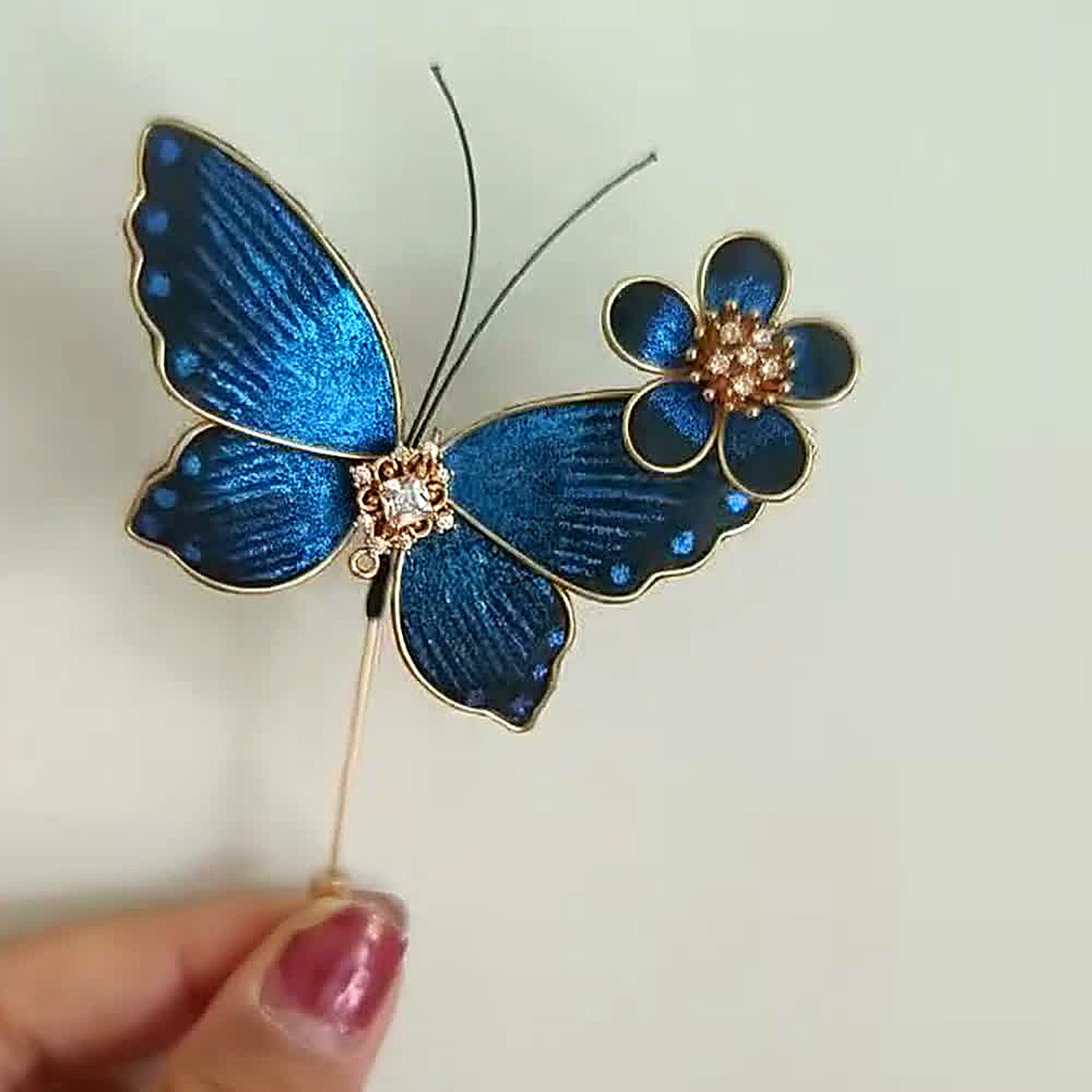
Suppliers that clear all five screening points are not common, which is why the £75–£300 tier stays empty in so many shops. As a worked illustration of the profile, Royal Chou operates through UK-registered Borderless Atelier Ltd (company no. 16999297, London W5), producing small-batch silk embroidery accessories and embroidery kits that sit squarely in that bracket.

Mapped against the five screening points:
- Trial quantities. Low MOQs on both finished accessories and kits, so a shelf can be tested rather than committed to.
- Story assets. Point-of-sale cards covering the long-and-short stitch technique, artisan lineage and motif symbolism ship with the goods, so no interpretive copy has to be written in-house.
- Customisation. Thread colourways and motifs can be matched to a collection item or exhibition theme at low volume.
- Domestic trading. UK entity, sterling invoicing, domestic fulfilment — standard purchase order, no import handling.
- Craft standards. Work by master embroiderer Zhou Xueqing is held in the permanent collection of the Royal School of Needlework, founded in 1872[13] — external verification rather than self-description. A collaboration with the British Library is in preparation.
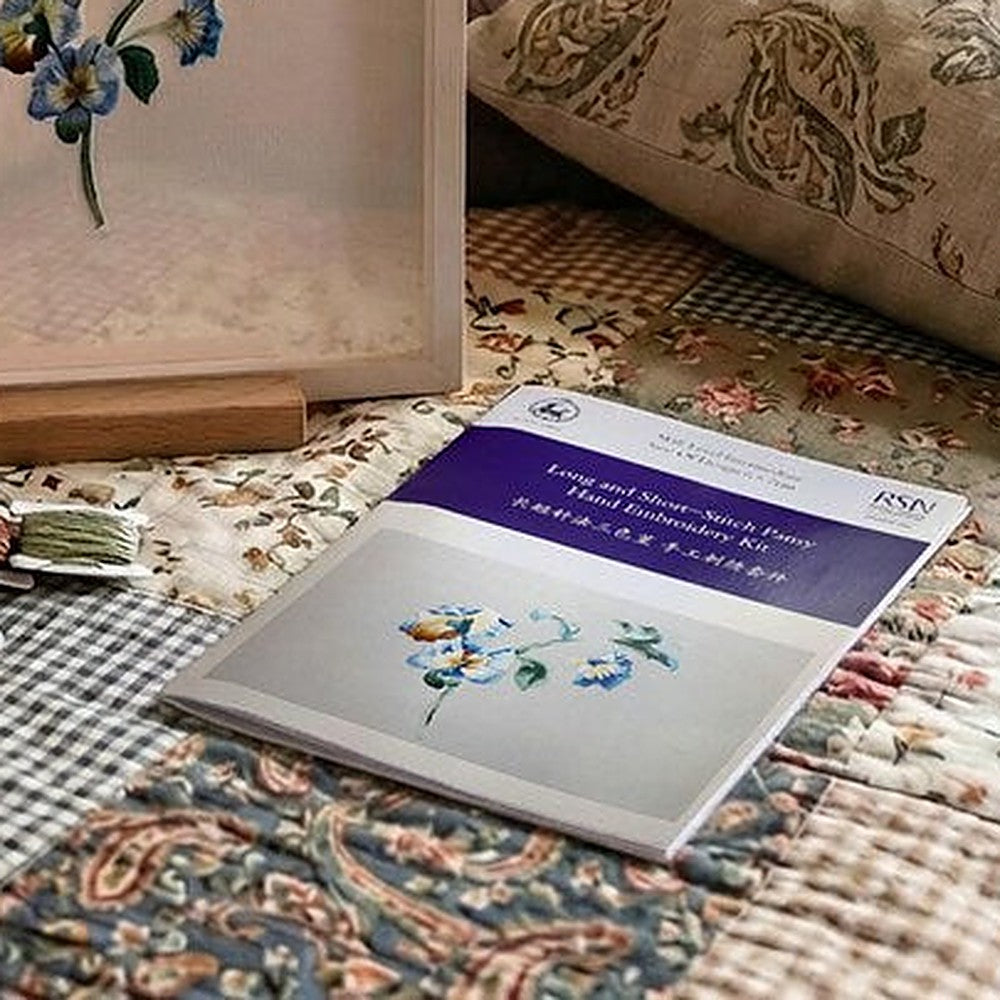
The Pansy kit is a useful example of format as much as product: twenty-one mulberry silk thread shades, silk organza and a mounting frame turn a technique visitors have just seen in a display case into something they can attempt themselves — and kits sit naturally across the entry and mid tiers rather than competing with the heirloom shelf.
Background reading for staff briefs and display copy: why handmade craft still matters today, the guide to heritage silk embroidery craftsmanship, and the timeless beauty of silk embroidery.
Where to Start
A small museum shop does not need a licensing budget or national footfall to perform. It needs three decisions made deliberately: move proven makers from consignment onto wholesale terms, open a single shelf in the £75–£300 bracket, and require story assets from suppliers rather than writing them yourself. Each is a change in procurement practice rather than a change in budget — which is precisely why they are available to shops of any size.
For a trade catalogue, a sample story-asset pack, or a conversation about collection-matched embroidery for an upcoming exhibition calendar, see the Royal Chou wholesale range.
Frequently Asked Questions
How much of a museum's income actually comes from the shop?
Almost 40% of total income across the cultural sector is now generated commercially, ahead of fundraising and grants.[2] Retail is the largest single component of that commercial income at 44%, with catering at 22% and events and venue hire at 18%.[3] Retail therefore accounts for roughly a sixth of total income at sector level — which is why shop margin decisions carry real institutional weight.
Is sale-or-return or small-batch wholesale better for a small museum shop?
Sale-or-return removes cash risk but costs margin and creates ongoing administration: stock reconciliation, multiple maker payouts, and unclear liability for damaged goods. Small-batch wholesale buys at trade price against a single purchase order, supporting a stronger margin and simpler accounting. The practical route is to trial a maker on consignment and convert proven sellers to wholesale.
What minimum order quantity should a regional museum negotiate?
As a planning benchmark, five to fifteen units per design, or an opening order of roughly £150–£300 per maker, is enough to test visitor response through one seasonal peak without committing speculative capital. What matters more than the exact figure is that the supplier will accept a genuine trial quantity and can reorder quickly if the line sells.
How do lean retail teams handle artisan storytelling without a design resource?
Make point-of-sale material a condition of the wholesale agreement rather than an internal task. Ask suppliers for printed story cards, a short maker biography, technique notes and high-resolution images. A one-page staff brief per line matters just as much, since conversion depends on front-of-house being able to explain the object.
Why does the £75 to £300 bracket matter for average transaction value?
Sub-£30 impulse lines drive transaction volume but contribute little absolute profit per sale. A small curated selection in the £75–£300 range captures gift buyers and high-intent visitors, lifting average transaction value without needing extra floor space. Most regional shops are thin in exactly this bracket.
Can small museums commission products matched to a specific exhibition?
Yes, provided the supplier works at low volume. Independent makers can often adapt colourways, motifs or packaging inserts to a permanent collection item or temporary show without a full production run. Scheduling that conversation against next year's exhibition calendar, rather than at launch, is what makes it practical.
Related Reading
References
- The Association for Cultural Enterprises. Trade body status and scale — representing over 1,650 sites across the UK and beyond.
- Association for Cultural Enterprises releases new Benchmarking Report — Blooloop. Almost 40% of total sector income generated commercially, ahead of fundraising and grants; report covers April 2023 to March 2024.
- New Benchmarking Report — The Association for Cultural Enterprises. Retail at 44% of commercial turnover, catering 22%, events and venue hire 18%; average commercial turnover £2.85m across a £3,000–£26m range; KPI availability for members.
- A Seat at the Table: Commercial Performance Barometer Report 2026 — The Association for Cultural Enterprises. Argument that organisations integrating commerciality into strategic decision-making generate income most successfully.
- About the V&A Shop — Victoria and Albert Museum. Support for independent craftspeople in the UK and overseas as a stated sourcing principle.
- What makes a great museum shop? With Compton Verney and Hay Castle. Sara Bowie on the shop as a bridge to the audience and the risk of generic catalogue stock; cross-venue product testing between regional sites.
- Museum of Cambridge Shop. Range built around local makers and small businesses.
- Weald & Downland Living Museum Shop. Rural heritage craft, home textiles and regional food produce.
- Birmingham Museums Shop. West Midlands independent makers across ceramics, illustrated gifts and jewellery.
- Pitt Rivers Museum shortlisted for Shop of the Year — University of Oxford Gardens, Libraries & Museums. Record 2025 retail year, rise in spend per visitor, maker partnership model, Phil Omodamwen, Al Am'ari collective, cross-departmental working.
- 2026 Winners — Museums + Heritage Awards. Shop of the Year outcome and full shortlist; ceremony held 13 May 2026.
- V&A East Shop: what to buy — Evening Standard. Over two-thirds of stock priced below £30; upper range around £175.
- Our history — Royal School of Needlework. Founded 1872; institutional standing of hand embroidery in the UK.