Black Tie vs Smart Dress Code: A Guide to British Formal Etiquette

Receiving a British invitation marked "Black Tie," "Smart," or "Lounge Suit" calls for reading a structured etiquette hierarchy rather than guessing. In British protocol, a dress code is defined by tailoring structure, garment silhouette and material grade — not by how much the outfit cost. Black Tie calls for a single-braid dinner suit with silk-faced lapels; Smart calls for a structured lounge suit or cocktail attire and excludes denim and athletic wear. Once you can read fabric grade, academic gown rules and national dress equivalence across the five tiers, Oxbridge formal halls, civic dinners and corporate galas all become straightforward.
The Five Tiers of British Formal Dress Codes at a Glance
British dress codes descend through five recognised tiers, codified by etiquette authorities such as Debrett's[1] and applied in institutional guidance such as Trinity Hall's dress code guide[5]. Formality is determined by garment construction, fabric composition and collar rigidity rather than by personal taste.
The matrix below sets out the baseline requirements, material expectations and boundaries for each tier.
| Dress Code Tier | Typical Occasions | Men's Standard Attire | Women's Standard Attire | Material Expectation | Common Faux Pas |
|---|---|---|---|---|---|
| 1. White Tie | State dinners, royal ceremonies, Commemoration Balls | Black single-breasted tailcoat worn unbuttoned, trousers with two lines of braid, white Marcella waistcoat and bow tie, detachable wing collar, studs not buttons | Full-length evening dress or ball gown; long gloves optional with sleeveless styles | Silk barathea, starched Marcella cotton piqué, silk satin | A black bow tie; a white jacket; single-braid trousers; a wristwatch |
| 2. Black Tie | University balls, charity galas, award dinners | Black or midnight blue dinner jacket with silk peak lapels or shawl collar, single-braid trousers, hand-tied black bow tie, cummerbund or low-cut waistcoat | Evening dress — knee-length cocktail or floor-length gown are both correct | Silk satin, velvet, heavy silk crepe, fine wool, hand embroidery | Notch lapels on a cream jacket; an ordinary business suit; a clip-on bow tie; high-sheen synthetics |
| 3. Black Tie Optional / Cocktail | Guest Night dinners, formal receptions | Dinner suit, or a dark lounge suit with white shirt and conservative silk tie | Cocktail dress, dressy jumpsuit, elegant separates, or a full-length gown | Silk crepe, fine lace, structured satin, elevated weaves | Casual daytime summer dresses; visibly plastic-looking synthetics |
| 4. Smart / Lounge Suit | Oxbridge formal halls, corporate dinners, guest nights | Dark or grey suit, collar and tie, polished formal black shoes | Skirt or trouser suit, or a dress and jacket, with mid-heel shoes | Fine wool, silk blends, structured cotton, silk accessories | Denim, trainers, polo shirts, uncollared tops |
| 5. Smart Casual | College lunches, academic mixers, day events | Blazer or sports jacket, chinos or dark trousers, collared shirt, leather loafers; tie optional | Smart day dress, or tailored trousers with an appropriate top | Neat cotton, linen, fine-gauge knitwear, silk scarves or brooches | Athletic wear, distressed denim, flip-flops, hoodies |
Overlay 1 — Academic gowns (Oxford, Cambridge, Durham). Worn over Tiers 2 to 4 depending on institutional regulation. The gown drapes from the shoulders and covers the central torso.
Overlay 2 — National or traditional dress. Recognised across Tiers 1 to 4, including a tailored silk qipao, hanfu, or Scottish kilt.[7]
Defining the hierarchy: from White Tie down to Smart Casual
At the apex sits White Tie, the most formal and rarest of the British codes, reserved for grand balls and royal ceremonies and traditionally announced weeks in advance.[2] Its rules are precise. Debrett's specifies a black single-breasted tailcoat worn unbuttoned, with matching trousers carrying two lines of braid down the outer leg, and a white shirt fastened with studs rather than buttons.[1] Black Tie trousers, by contrast, are tapered with a single row of braid — the fastest way to tell the two tiers apart at a glance.[1]

Terminology at the lower end causes more confusion than the tailoring at the top. "Lounge Suit" is, in Debrett's phrasing, a misleadingly named code: it means business attire — a dark or grey suit, collar and tie, and polished black shoes for men; a skirt or trouser suit, or a dress and jacket, for women.[1] An invitation marked "Informal" belongs to the same family. It has never meant jeans and a hoodie; historically it distinguished a lounge suit occasion from a formal one requiring morning dress or White Tie.
The academic gown variable: dressing for an Oxbridge formal hall
At the ancient universities, formal hall adds a layer that no standard dress code chart accounts for. Oxford requires full academic dress at formal University ceremonies, with sub fusc — from the Latin sub fuscus, meaning very dark — worn beneath the gown.[3] The University's regulations set this out in detail[4], and individual colleges publish their own restatements for students and postgraduates.[9][10] Depending on standing, you will wear a hip-length commoner's gown, a scholar's gown, or a graduate gown over your formal attire.[3]
This has a practical consequence that catches out most first-timers. The gown hangs from the shoulders and covers the central chest and waist in black cloth, so a necklace at the sternum, a waist belt, or a detail at the neckline simply disappears for the entire evening. Anything you want seen has to sit outside that drape.
Where accessories stay visible under a gown
Outer shoulder line
Jacket lapel / collar
Central chest · neckline · waistline · belt detail
A brooch on the shoulder line or lapel reads clearly; the same piece at the sternum vanishes.
Placing a structured brooch on the outer shoulder seam or the jacket lapel keeps it fully in view for the whole dinner. A second consideration follows from the fabrics involved: silk crepe, chiffon, lace and fine wool all sag or tear under a heavy pin, so weight matters as much as placement.
Cultural equivalence: wearing national dress within formal protocol
International guests frequently assume traditional attire is a risk. It is not. British livery company protocol states plainly that national dress may be worn as evening dress at both white tie and black tie functions, alongside military mess dress.[7] Oxbridge student bodies go further and actively encourage it: guidance issued by the Cambridge and Oxford Chinese Students and Scholars Associations for their freshers' formal dinners lists tangzhuang, hanfu, zhongshan suits and qipao as recommended options alongside Western evening dress.
So a structured, tailored silk qipao, an intricate hanfu, or a formal Scottish kilt satisfies the expectations of Black Tie or Lounge Suit. The qualifying test is the same one applied to Western clothing: fabric quality and tailoring structure must reflect the dignity of the occasion.
Black Tie Decoded: Requirements, Fabric Etiquette and Real-World Rules
Black Tie is the standard code for British gala dinners, university balls and award ceremonies — for most people, the most formal code they will ever encounter.[1] Getting it right depends as much on fabric selection as on silhouette.
The mechanics of Black Tie attire
A traditional Black Tie ensemble for men is a black or midnight blue dinner jacket in fine wool barathea or mohair, with lapels faced in silk satin or grosgrain. Debrett's specifies a single-breasted jacket with no vents, covered buttons, and a soft-collared shirt, and advises learning to tie your own bow tie rather than reaching for a ready-tied one.[1]
Four rules separate a correct execution from an approximate one:
- Lapel-to-tie texture matching. The bow tie should echo the lapel facing — smooth satin with satin, ribbed grosgrain with grosgrain.
- Waistband concealment. The trouser waistband is never visible. A cummerbund or a low-cut evening waistcoat covers it on a single-breasted jacket.
- No wristwatch. Evening etiquette holds that a wristwatch interrupts the line of the shirt cuff and hints at clock-watching. Carry a pocket watch or go without.
- Cream dinner jacket lapels. For warm-weather balls, a cream jacket should have peak lapels or a shawl collar in self-faced textured cloth. Notch lapels read as service uniform.
A visual walk-through of the dress code hierarchy.
The fabric hierarchy: why material grade defines Black Tie
The most common misconception is that Black Tie is about the colour black. It is not — the code is governed by fabric grade. Under the warm, low-kelvin light of a candlelit dining hall, standard polyester and shiny nylon blends throw back a flat, glassy sheen that announces the material instantly.
Natural formal fabrics behave differently. Silk satin, silk velvet, heavy silk crepe and wool barathea absorb and diffuse light, producing the subdued, dimensional lustre that reads as formalwear across a room. This is why the material column in the table above matters more than the colour column, and why an accessory in genuine silk can carry more formal weight than a larger piece in a synthetic.
Real-world execution: minimum requirements versus social reality
Institutional guidance sets the standard; practice at British universities and gala venues allows some latitude. A guest without a bespoke dinner suit can attend comfortably by meeting the structural minimum — a dark tailored suit with a black bow tie and dark leather shoes for men, a dark evening dress for women.
Undershooting, though, is the error that cannot be repaired on the night. The menswear stylist Chris Modoo has made the point that overdressing is recoverable — a jacket can come off, sleeves can be rolled — whereas a jacket you did not bring cannot be conjured up on arrival. The asymmetry is the whole argument for dressing to the upper edge of an ambiguous code.
Smart Dress Code: The Intermediate Zone Where Mistakes Happen
"Smart" or "Lounge Suit" generates more confusion than any other tier. Sitting between full Black Tie and casual dressing, it is routinely misread as permission to relax — and the name itself is part of the problem, since Debrett's notes the code actually denotes business attire.[1]
Deciphering "Smart" on a British invitation
When an invitation to a college formal hall specifies "Smart," it is asking for structured tailoring, not a smarter version of everyday clothes.

The gap between official guidelines and social expectation
College rules state requirements neutrally, but the social dynamic at a formal hall runs a level above the written minimum. Guidance from Oxford student organisers captures the gap directly: although many colleges do not enforce their dress codes strictly, most students still dress up carefully for formal. No organiser will turn away a guest in a plain black dress — but arriving in an unadorned synthetic garment among peers in rich textures and traditional gowns is a quietly uncomfortable position to occupy for three hours.
Reading that gap correctly is what makes intermediate codes manageable. The answer is not a dramatic tulle ballgown. It is a clean, structured outfit lifted by better material texture.
Common pitfalls under Smart
The most frequent error is assuming that dark denim or clean leather trainers clear the bar. In British etiquette they do not, regardless of price point or label — denim and rubber soles are categorised as casual wear. The second is the flat, untextured synthetic black dress, which loses all definition under dim evening lighting and photographs as a silhouette rather than an outfit.
Navigating Themed and College-Specific Invitation Codes
Invitations often blend a traditional tier with a theme or an institutional rule. Two blended forms come up most often.
- Black Tie Optional. The host will be in Black Tie and guests are encouraged to follow. A dark navy or charcoal lounge suit with a conservative silk tie is fully acceptable for a man without a dinner suit; women may choose between a full-length gown and a cocktail dress.
- Themed codes, such as "Old Shanghai Glam." Common at cultural galas and university balls — the Oxford Chinese Students and Scholars Association has run a formal on exactly this theme, framing it as Old Shanghai romance meeting Western Black Tie. Its own guidance suggests pairing a qipao with a Western shawl, or a Western gown with Chinese hair ornaments such as a buyao or pearl pin. Blending is the point of the code, not a deviation from it.
Enforcement also varies widely between institutions. Some colleges require gowns and dark ties at every formal hall; others permit a lounge suit without a tie for weekday dining. Trinity Hall publishes its expectations in writing[5], as does the Trinity College postdoctoral community[6]. Read the invitation and the host college's own page rather than assuming one set of rules travels.
The Material Upgrade Strategy: How Accessories Resolve the Dilemma
Buying a single-use gown or dinner suit for each invitation is impractical. The efficient route through the British dress code system is material elevation — using a concentrated piece of high-grade fabric to lift a plain dark dress or lounge suit to the tone the code expects.
Escaping the plain dark dress problem
The standard safe formula for a woman attending a British formal dinner is a black or dark evening dress with heels and a clutch. It is sound advice, and it is also why formal dining rooms fill with near-identical dark silhouettes. Under candlelight, an untextured synthetic in that silhouette reads as flat and featureless.
Distinction in this setting does not come from a louder colour or a larger garment. It comes from adding a small area of genuinely high-grade material that responds to light — which is precisely the variable the dress code was measuring all along.
Placement under a gown, revisited
The visible zone principle set out earlier in this guide becomes decisive here. If your evening includes an academic gown or an evening cloak, the only reliable positions for a decorative piece are the upper lapel, the shoulder seam and the outer collar line. A necklace or a waist detail will be under black cloth from the moment you sit down.

Fabric elevation: mulberry silk detail as the efficient path
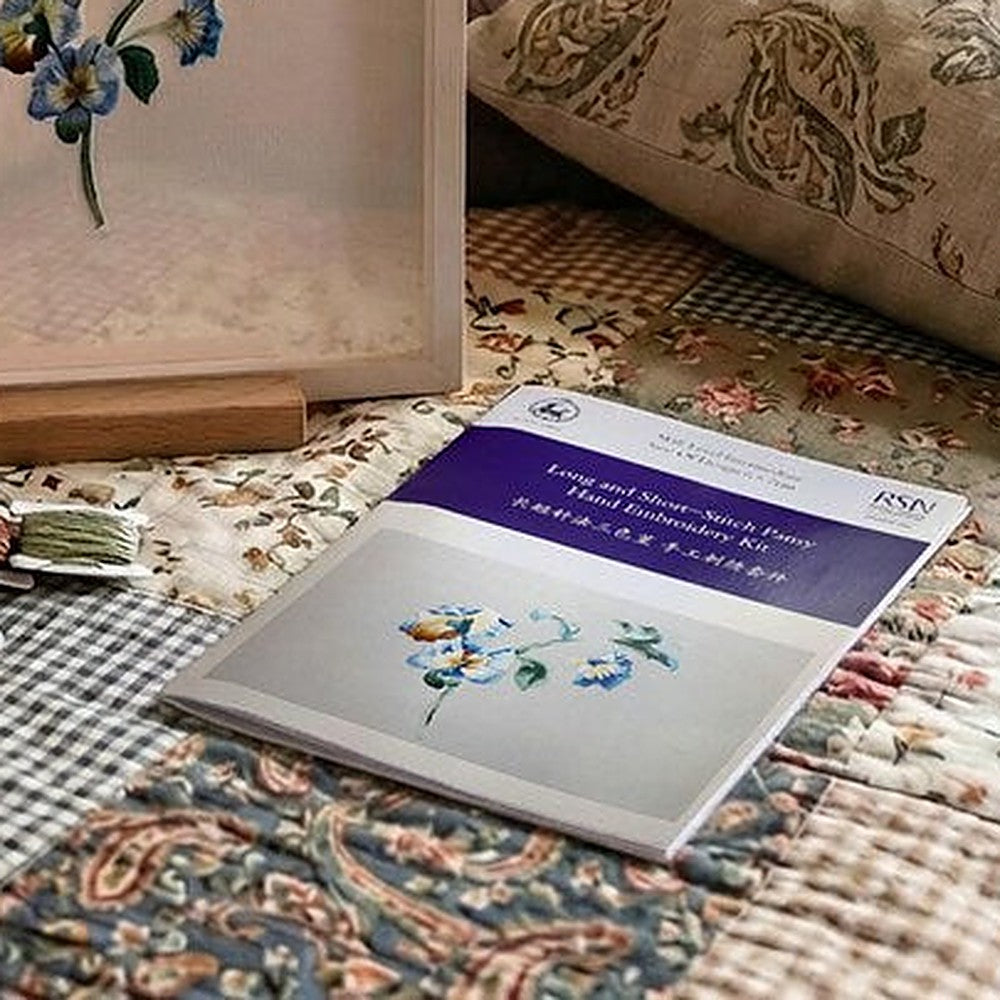
Introducing a natural silk texture upgrades the material grade of an outfit without a new gown. Hand embroidery carries additional weight in British formal culture: the Royal School of Needlework, founded in 1872 and granted royal patronage by Queen Victoria, has preserved hand embroidery as a recognised art form for a century and a half.[8] A hand-embroidered silk piece carries a provenance that a moulded synthetic accessory cannot.
That test — can the technique and the maker be traced, or is the claim simply asserted — is not unique to personal dressing. It is the same standard British museum buyers now apply when they source craft for their own shops, which we set out in our framework on turning collection stories into products.
| Under candlelight | Pure mulberry silk embroidery | Synthetic polyester detail |
|---|---|---|
| Lustre | Soft and multi-dimensional; diffuses low-kelvin hall light | Hard, uniform glare; reflects flat |
| Weight on fabric | Ultra-light; sits flat on crepe, chiffon and lace | Metal-cast bases drag and pull delicate cloth |
| Surface | Directional stitch texture with visible depth | Mass-produced uniform finish |
| Code compliance | Meets the formal fabric expectation at Tiers 2 to 4 | Reads as casual regardless of garment shape |
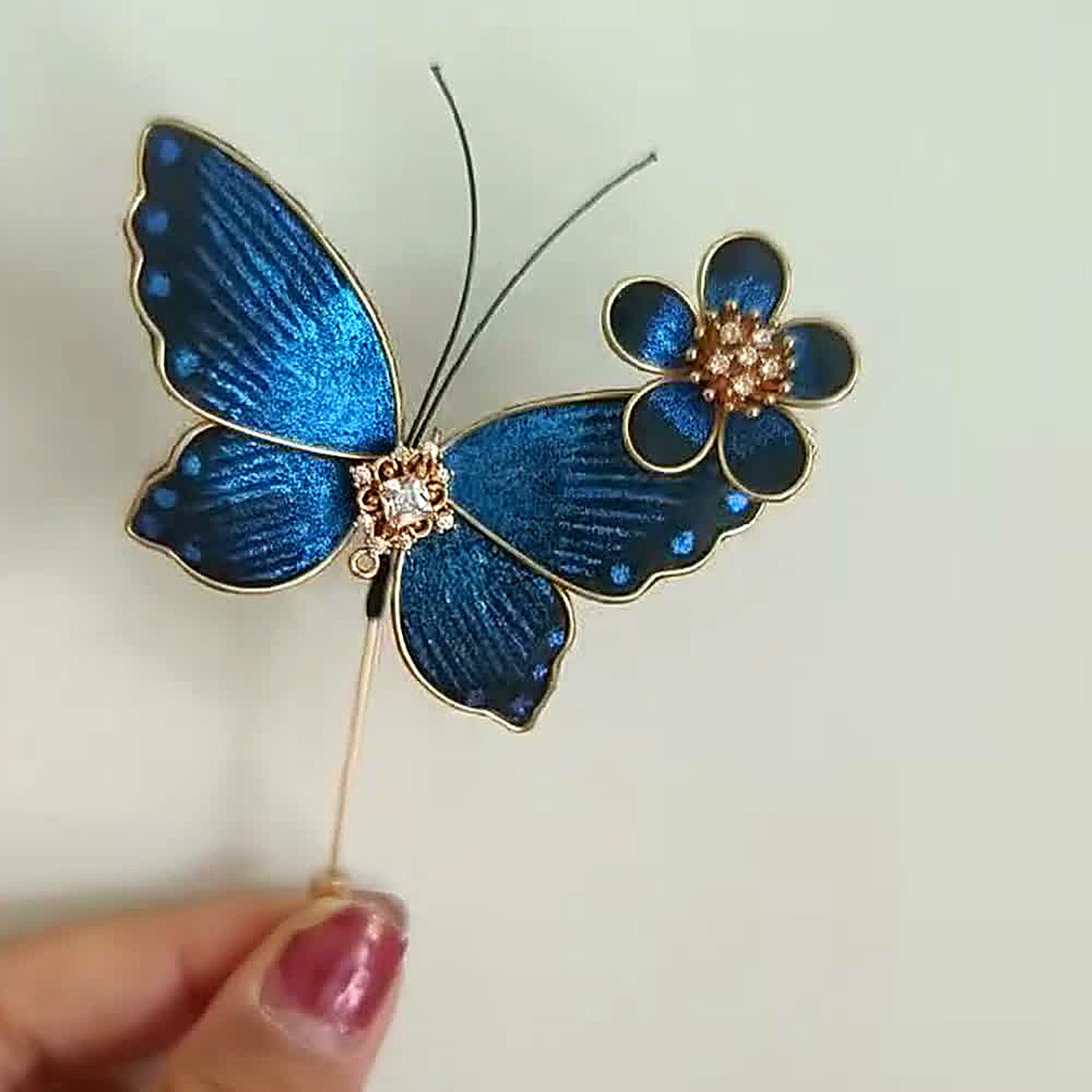
For guests looking to lift a dark dress or a formal suit, Royal Chou hand-embroidered silk brooches offer this upgrade in a form built for exactly these fabrics and these rooms.

- Material authenticity. Worked in pure mulberry silk thread, the surface catches candlelight with a soft, layered lustre rather than a hard synthetic flash.
- Weight and fabric safety. Built to be ultra-lightweight, so it sits securely on gown silk, lace or a lapel without dragging or leaving pin damage.
- Heritage and provenance. Three generations of Su embroidery practice combined with British curation. Pieces such as the handmade burgundy peony silk flower brooch also do useful social work — they give you something to talk about during seating rotations.
- Range and use. Dispatched from the UK in two to three weeks, from £75 for entry pieces up to £1,190 for collectible commissions.
For more on the technique itself, read our complete guide to Royal Chou's heritage craftsmanship and The Timeless Beauty of Silk Embroidery. For how these techniques sit within a wider tradition, see four handmade techniques redefining timeless jewellery.
Conclusion and Frequently Asked Questions
British formal dress codes are not a guessing game, and they do not require a wardrobe of single-use garments. Reading the five tiers correctly — and recognising that the system measures tailoring structure and material grade rather than colour or cost — lets you dress accurately with what you already own, then raise it where it counts with one well-chosen, high-grade silk detail.
Frequently asked questions
Is Black Tie the same as wearing a black dress or a black suit?
No. Black Tie is a specific tier requiring a dinner jacket with silk-faced lapels, single-braid trousers and a black bow tie for men. For women, Debrett's notes that both floor-length evening dresses and knee-length cocktail dresses are correct.[1] An ordinary black business suit or a casual black daytime dress does not meet the code, because formality is set by construction and fabric rather than by colour.
Can I wear traditional Chinese attire such as a qipao or hanfu to a UK formal dinner?
Yes. British livery company protocol states that national dress may be worn as evening dress at both white tie and black tie functions[7], and Oxbridge student bodies actively encourage traditional dress at formal dinners. A tailored silk qipao, a hanfu or a Scottish kilt is treated as a full equivalent to Western formalwear provided the tailoring and fabric match the occasion.
What if an invitation simply says "Smart"?
Smart requires structured tailoring. Men wear a dark lounge suit in navy or charcoal with a collared shirt, tie and dark leather shoes. Women wear a cocktail dress, structured midi dress or tailored trouser suit with dress shoes. Denim, trainers, polo shirts and athletic wear fall outside the code regardless of price or brand.
Do I need an academic gown for an Oxbridge formal hall, and how does it affect my outfit?
Students and college members are usually required to wear a gown over formal wear or sub fusc.[3] Because the gown drapes from the shoulders and covers the central chest and waist, accessories placed on the sternum or waistline disappear. Position brooches on the outer shoulder line or jacket lapel so they stay inside the visible zone.
Is a short cocktail dress acceptable for a Black Tie Optional event?
Yes. A cocktail dress is acceptable provided the tailoring is clean and the fabric is a formal grade such as silk crepe, lace or structured satin. Formal evening shoes and a high-grade silk or fine jewellery accessory raise a shorter hemline to the tone of the event.
How do I stop a brooch pin from damaging a delicate silk dress?
Use accessories made for fine evening wear rather than heavy metal-cast jewellery. Hand-embroidered mulberry silk brooches deliver formal texture at a fraction of the weight, which prevents the sagging, pulling and pin-hole tearing that a heavy piece causes on silk crepe, chiffon or lace.
Related Reading
References
- Deconstructing Dress Codes — Debrett's. Tier definitions, braid detail on White Tie and Black Tie trousers, women's Black Tie options, and the Lounge Suit naming problem.
- Do Dress Codes Matter? — Debrett's. Relative rarity and formality of White Tie; business-attire meaning of Lounge Suit.
- Academic Dress — University of Oxford. Sub fusc requirements, gown types for students, and where full academic dress is required.
- Vice-Chancellor's Regulations 1 of 2002 — University of Oxford, Governance and Planning. The formal regulation governing academic dress and subfusc.
- Guide to Dress Codes — Trinity Hall, University of Cambridge. College-level interpretation of formal dress codes for hall and events.
- Formal Halls — Trinity College Postdoctoral Society, University of Cambridge. Practical formal hall conventions, including gown expectations.
- Dress Codes and Protocol — The Worshipful Company of Coachmakers. Confirms national dress and military mess dress as accepted evening wear at white tie and black tie functions.
- Our History — Royal School of Needlework. Founded 1872; royal patronage; the institutional standing of hand embroidery in Britain.
- Academic Dress (Sub Fusc) — Blackfriars Hall, University of Oxford. College-level statement of sub fusc components and exemptions.
- Postgraduate Academic Dress — St Hugh's College, University of Oxford. Postgraduate gown and sub fusc guidance at college level.